Trust Tax Reform, Travel Deductions, Bigger Penalties & SMSF Property: Your September 2026 Update
Trust Tax Reform, Travel Deductions, Bigger Penalties & SMSF Property: Your September 2026 Update
This month we look at four developments that could affect individuals, businesses, trusts and SMSF trustees: a proposed 30% minimum tax on discretionary trusts, updated ATO travel and overtime meal rates, an increase to Commonwealth penalty units, and what SMSF trustees need to have ready for a smooth property audit.
Let's break down what's changed and what it means for you, in plain English.
1. Discretionary Trusts Could Face a New 30% Minimum Tax
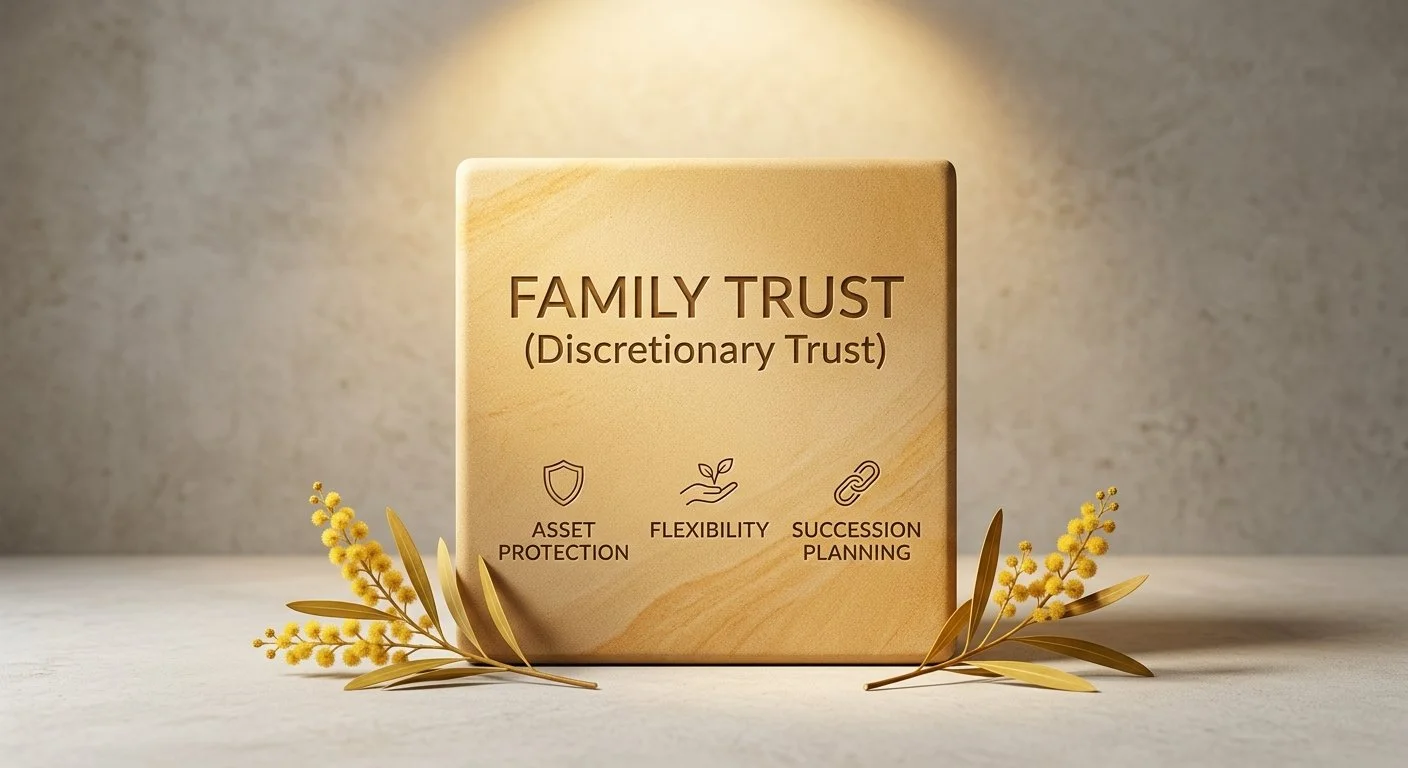
Discretionary trusts, often called family trusts, have long been a popular structure for Australian families and businesses thanks to their flexibility, asset protection and succession planning benefits. In the 2026-27 Federal Budget, the Government proposed that from 1 July 2028, trustees of discretionary trusts would generally need to pay a minimum tax of 30% on the trust's taxable income.
Where trust income is distributed to individuals, those beneficiaries would generally get a non-refundable tax offset for the tax already paid by the trustee, reducing the risk of double taxation. But a company that receives a trust distribution would not get that offset, meaning income distributed from a trust to a corporate beneficiary could effectively be taxed twice. Many family groups have historically distributed some income to a company to manage cash flow and fund growth, so this is worth watching closely.
A temporary three-year rollover period from 1 July 2027 has also been proposed to help groups restructure into companies or fixed trusts without immediate tax consequences. Restructuring is rarely simple though, and can involve stamp duty, loan approvals, contract changes and professional advice. Importantly, the rules aren't final yet, a Treasury consultation paper was released in July 2026 and legislation hasn't been introduced, so details could still change.
2. New Travel and Overtime Meal Rates, But Don't Assume They're an Automatic Deduction
The ATO has released its updated reasonable travel and overtime meal allowance rates for 2026-27 in Taxation Determination TD 2026/4. The overtime meal allowance has increased to $40.00, and domestic and overseas travel rates have also been updated based on salary and destination.

These figures get a lot of publicity each year, but they're often misunderstood. A common myth is that employees can automatically claim a deduction up to the ATO's published rate. In reality, the reasonable rates only become relevant if you receive a genuine travel or overtime meal allowance, one that's paid specifically for work travel or overtime, shown separately from normal salary, and intended to cover expenses you're expected to incur. If it's just built into your regular pay, the normal substantiation rules apply instead.
📖 What do the reasonable rates actually do?
They don't set an automatic deduction amount. Employees can still only claim what they actually spent on deductible expenses. The reasonable rates simply mean that, in certain circumstances, you may not need to keep a receipt for every single expense, but you still need to have genuinely incurred the cost.
Even with a genuine allowance, it's worth keeping a simple travel diary, records of meals and incidental expenses, bank statements, and a sample of receipts. If you're away six or more consecutive nights, a formal travel diary recording dates, locations and purpose is generally required.
3. Compliance Mistakes Just Got More Expensive
From 1 July 2026, the value of a Commonwealth penalty unit increased from $330 to $364. It sounds like a small administrative tweak, but because many ATO penalties are calculated using penalty units rather than fixed dollar amounts, the increase flows straight through to what you'd actually pay.
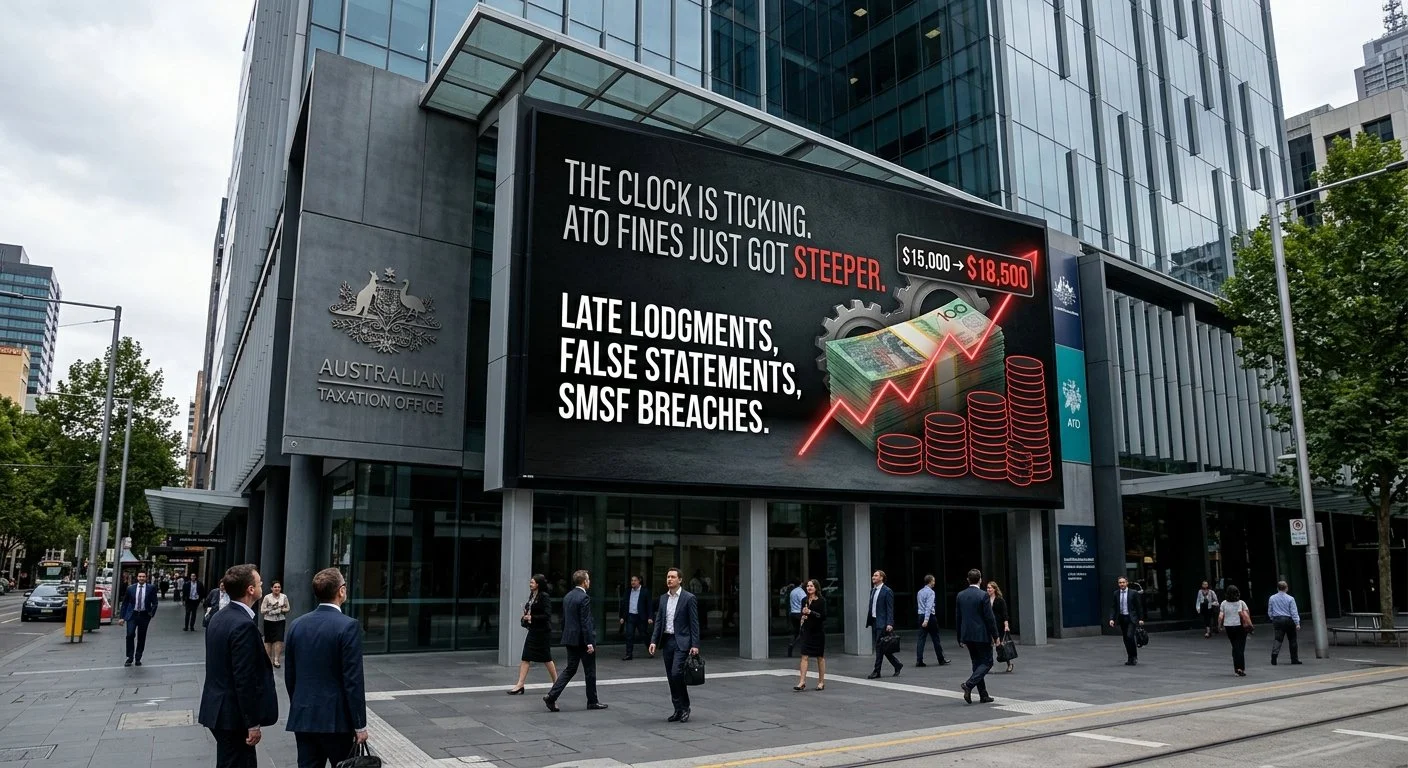
- Late lodgement: The maximum base penalty for a small entity has risen from $1,650 to $1,820.
- False or misleading statements: Base penalties have increased to $7,280, $14,560 or $21,840 depending on the circumstances.
- SMSF breaches: Some penalties previously set at $19,800 now sit at $21,840, and these are generally charged to each individual trustee, not the fund, and can't be paid from fund assets.
4. SMSF Trustees: Get Your Property Evidence Ready Before the Audit
Every SMSF asset needs to be valued as at 30 June each year, and while that's straightforward for listed shares, property is a different story. Trustees are responsible for determining market value, and your fund auditor will need objective, supportable evidence to back it up.

An independent valuer is worth considering where a property represents a significant part of the fund's value or could be tricky to value. Otherwise, trustees generally need at least three genuinely comparable recent sales, a real estate agent appraisal that includes comparable sales, or (for commercial property, alongside other evidence) net income yields.
If your SMSF leases business real property to a member or related party, that arrangement still needs to be on arm's length, commercial terms, it isn't a licence to charge below-market rent. To evidence this, auditors will want to see a properly documented lease, a rent appraisal from when the lease started, proof the arrangement is operating on those terms, and a fresh rent appraisal whenever a lease is renewed.
Frequently Asked Questions
Does the proposed 30% minimum tax on trusts apply to every discretionary trust?
No. Fixed trusts, widely held trusts, complying super funds, charitable trusts, deceased estates, special disability trusts and genuine testamentary trusts would generally be excluded, and the rules aren't final yet.
Can I automatically claim the ATO's reasonable travel allowance rate as a deduction?
No. You can only claim what you actually spent on deductible expenses. The reasonable rates just mean you may not need a receipt for every expense in certain circumstances.
How much did Commonwealth penalty units increase from 1 July 2026?
From $330 to $364, increasing the cost of many ATO administrative penalties including late lodgement and false or misleading statement penalties.
Can my SMSF lease property to a related party?
Yes, where the property meets the business real property definition, but the lease must be on arm's length commercial terms, supported by a proper lease document and rent appraisal.
The Bottom Line
From a proposed shake-up of trust taxation to rising penalties and property audit expectations, there's a lot for business owners, trustees and everyday taxpayers to keep an eye on this month. None of it needs to be daunting, but each item is worth a conversation, especially given how quickly avoidable compliance costs can add up.
If any of these developments touch your trust, your employment arrangements, or your SMSF, our team at JPR Business Group is here to help you understand exactly what it means for you and what to do next.
Disclaimer: This blog is for educational purposes only and does not constitute formal financial or tax advice. Please consult a professional for advice specific to your situation.